Soccer Rondo Variations: Dynamic Drills for Faster Cognitive Development and Game Realism
Most youth soccer coaches focus on physical drills. Speed. Strength. Endurance. But the real game happens in the head. A player who thinks faster, sees space earlier, and makes decisions in half a second will always beat a purely athletic opponent.
That is where soccer rondo variations for youth change everything. Rondos are not just fancy warm-ups. They are cognitive training tools.
When done right, they rewire how young players read the game. This guide walks through real rondo variations that work, the science behind them, and exactly how to run them without wasting practice time.
What Is a Rondo? And Why the Name Stuck
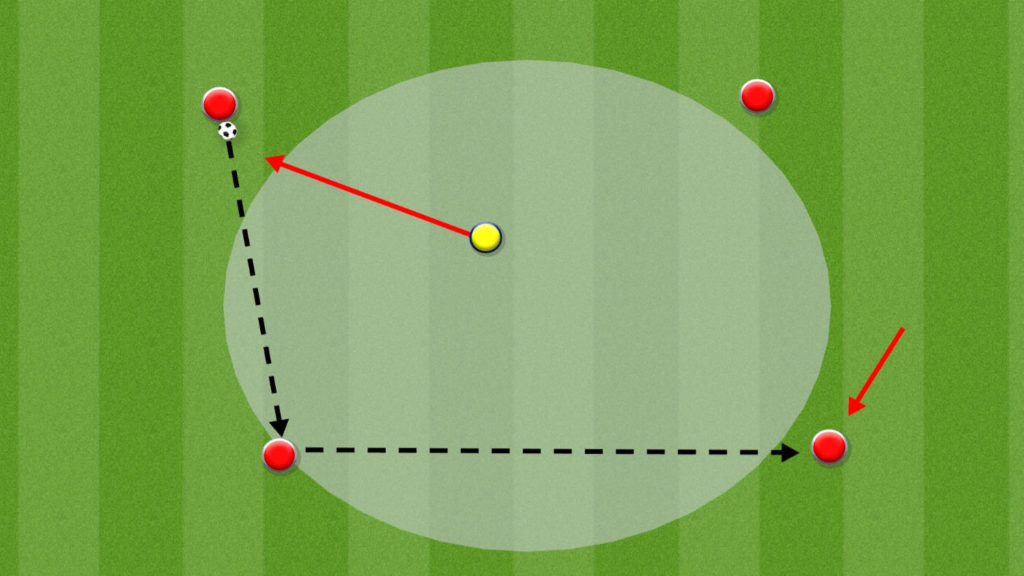
Why is it called rondo in soccer? The name comes from music. A rondo is a musical piece where a recurring theme alternates with contrasting sections. In soccer, the pattern is similar. The ball keeps moving in a circle. The defenders chase. The rhythm repeats.
Read Also: Did Shilo Sanders Get Picked up by the Pittsburgh Steelers
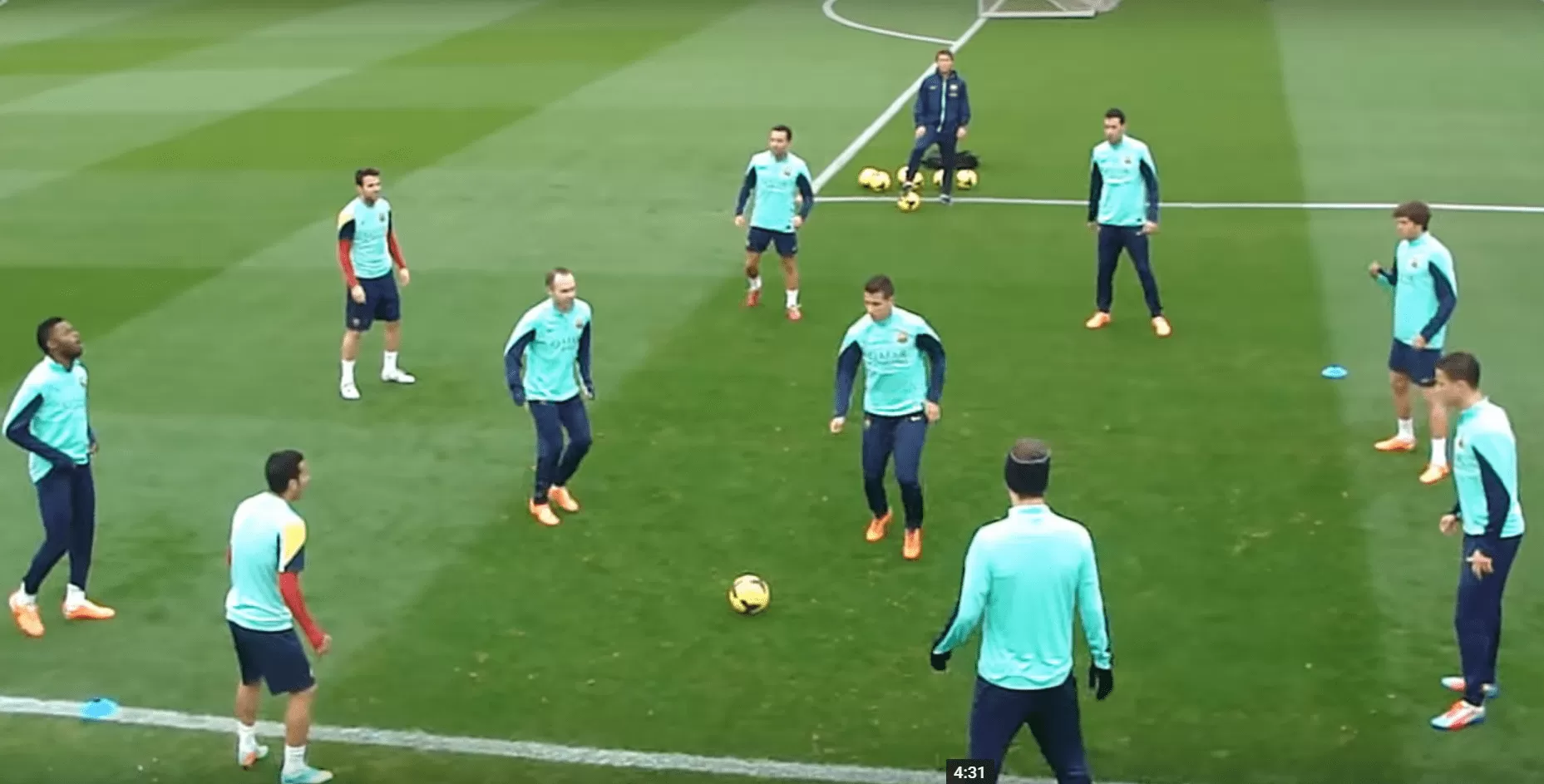
The drill itself came from Ajax Amsterdam and later Barcelona’s famous “rondo” circles. Pep Guardiola made them iconic. Players like Xavi and Iniesta spent hours in these tight spaces. They learned to feel pressure without panicking .
Who invented rondo football? No single person holds that title. Dutch coaches in the 1970s developed the concept under Rinus Michels. Johan Cruyff brought it to Barcelona’s La Masia academy. The modern version we use today is a mix of those influences.
But forget the history lesson. What matters is this: a rondo puts players in a numerical disadvantage. Three attackers against one defender. Five against two. Seven against three. The outnumbered group must keep the ball. The smaller group hunts to win it back.
That imbalance forces quick thinking. No time to admire your pass. No time to stand still. You scan, you move, you release .
The Science: Why Rondos Grow Smarter Players?
A 2025 study published in Biology of Sport tracked U-13 soccer players over eight weeks. One group did regular training. The other added rondo soccer exercises once per week.
The results were not subtle. The rondo group improved problem-solving scores by up to 227%. Creative thinking jumped significantly. The researchers measured everything. The rondo players made faster decisions under pressure.
Here is what that means for your team. A 10-minute rondo gives a player 50 to 60 touches. In that same time, a traditional drill might give 10 touches. More touches mean more decisions. More decisions mean faster brain wiring.
I saw this firsthand with a U-12 team I helped last season. We added two rondos per practice. Fifteen minutes total. Within six weeks, parents started asking what changed.
Their kids were finding passes they never saw before. Shots came quicker. Panic touches dropped. The rondos did not replace other drills. They just made everything else easier.
The 7 Best Soccer Rondo Variations for Youth
Not all rondos are equal. Some are too easy. Some confuse young players. These seven variations work for ages 9 to 16. Pick the right one for your team’s level.
1. The Basic 4v1 Rondo (Ages 8-11)
Setup: 10×10 yard grid. Four attackers stand on four sides, outside the square. One defender inside. Attackers pass around. Defender chases.
The rule: Attackers must stay on their line. They can move left and right but not enter the square. Defender stays inside.
You Must Also Like: 5 Highest Paid Football Managers in the World
Why it works: Young players learn angles. You cannot just kick the ball anywhere. You need to find the open teammate. The defender learns to cut passing lanes, not just chase.
Rotation: After the defender wins the ball or forces a bad pass, the player who made the mistake switches in. Keep a pile of balls next to you. When one goes out, feed the next instantly. No resting.
2. The 5v2 Rondo Pairs Game (Ages 12-16)
This is my favorite for cognitive development. Easy soccer rondo variations often lack transition pressure. This one fixes that.
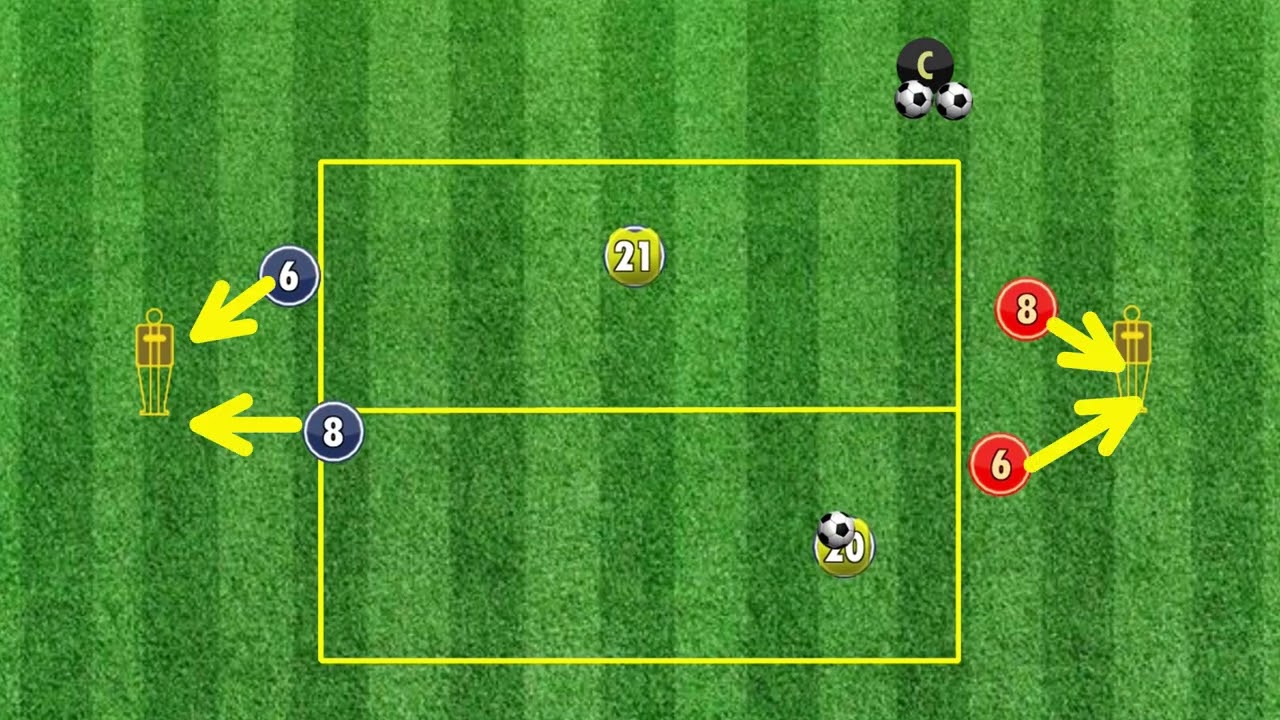
Setup: 15×15 yard grid. Seven players total. Split into three pairs (Blue, Green, Red) plus one neutral “Joker” player. The Joker always plays for the team in possession.
How it plays: Coach feeds a ball in. Two pairs (four players) plus the Joker attack against the third pair defending. That creates a 5v2 overload.
The kicker: When the defending pair wins the ball, the pair that lost it instantly becomes defenders. No pause. No reset. The transition happens in one second.
Why it changes games: Players learn accountability. Your mistake means your partner runs with you. They also learn to counter-press instantly, just like professional teams. The neutral Joker develops peripheral vision by constantly finding space.
Pro tip: For younger players (U10-U12), use a larger grid (15×15). For advanced academy players (U14+), shrink it to 10×10 or 12×12. Tighter spaces force one-touch decisions.
3. The 5v3 Possession Rondo (Ages 12+)
Setup: Four attackers on the sides. One attacker in the middle of the square. Three defenders try to win the ball.
Scoring: Attackers get one point for eight consecutive passes. Defenders get one point for an interception plus two passes. Play four-minute rounds .
Why it works: The central attacker learns to shield and turn under pressure. Defenders learn to work as a unit. You cannot win alone against five players.
4. Protect The Cone (All Ages)
Setup: Standard 5v2 rondo shape. Place a large cone in the exact center of the grid.
The goal: Attackers try to hit the cone with a pass. Defenders try to intercept.
When the cone gets hit: The attacker who lost possession goes into the middle with one partner. They become the new defenders.
Why kids love this: It adds a target. The cone does not move. Players start looking for penetrating passes instead of safe sideways balls.
5. 4v2 With Small Goals (Ages 12-16)
Setup: Same as basic 4v2. But place two small goals on opposite sides of the grid.
The rule: Attackers keep possession as usual. When defenders win the ball, they must score in one of the small goals as quickly as possible. Attackers try to win it back.
Rotation: After a goal, the two defenders switch with two attackers.
What this teaches: Transition speed. In a real match, the moment you win the ball, you attack. No slow buildup. This drill forces that habit.
6. Rondo 3v3 + 2 Neutrals (Ages 13+)
Setup: Three red players, three blue players inside the grid. Two neutral players stay on opposite sides of the grid. Neutrals always play for the team with possession.
Scoring: One point when a team passes from one neutral to the other without losing the ball.
Why use this: Neutrals become the “reset” button. Teams learn to switch the field. They cannot just pass in a small circle. They must use width.
7. The 4v4 + 4 Corner Rondo (Advanced, Ages 14+)
Setup: 25×25 yard grid. Four small corner zones, each one yard by one yard. Three teams of four players.
The game: Two teams play 4v4 in the middle. The third team occupies the four corners. The team in possession gets an 8v4 advantage. They score one point for every six consecutive passes.
Rotation: After two minutes, the corner team swaps with one middle team.
What this builds: Patience. With an 8v4 overload, scoring points is easy. The challenge is not rushing. Players learn to circulate the ball until the right moment appears.
Coaching the Details That Matter
For Attackers (The Team Keeping the Ball)
Scan before you get the ball. Look over your shoulder. Know where the pressure comes from. Know where your out ball is. The best rondo players have their next pass planned before the ball touches their foot.
Stay on your toes. Flat feet kill rondos. If you are standing still, you are already beat. Keep your weight forward. Be ready to move sideways or backward.
Invite the defender. Do not just pass away from pressure. Sometimes, draw the defender toward you. Then slip the ball behind them. This creates space for your teammate.
Support immediately. After you pass, move. Create a new passing lane. Do not stand and watch.
For Defenders (The Players in the Middle)
Sprint to close. Slow to tackle. Close the distance quickly. But as you get within two yards, shorten your steps. Get low. React to the attacker’s move. If you sprint all the way, you will fly past them.
Cut the passing lane. Good defenders do not just chase the ball. They position their body to block the most dangerous pass. Force the attacker into a worse option.
For Coaches (The Person Running It)
Keep the ball moving. Have a pile of soccer balls at your feet. The moment a ball leaves the grid, feed a new one in. Do not let players stand around fetching balls.
Talk less. Let them play. Rondos are discovery tools. If you stop play every ten seconds to coach, you destroy the flow. Let them make mistakes. Then ask questions afterward: “What did you see there?”
Adjust the difficulty. Too easy? Limit touches. One-touch passing only. Too hard? Add a neutral player. Increase the grid size. Every team is different. Adapt.
Equipment Advice: What to Buy, What to Skip?
What you actually need:
-
Cones. Lots of them. Flat discs work best. Buy 50 for $15 online.
-
Pinnies (bib sets). Four different colors. You need pairs. One red, one blue, one green, one yellow. That covers most rotations.
-
Soccer balls. At least six per rondo grid. Cheap practice balls are fine.
What you can skip:
-
Expensive “rondo boards” or branded training tools. A cone is a cone.
-
Pop-up goals for small-sided rondos. Use corner flags or extra cones instead.
-
Fancy heart rate monitors. Rondos are about decision speed, not cardio.
One honest warning: Do not buy the cheapest cones. They crack in cold weather. Spend $0.50 more per cone. They will last three seasons instead of three months.
A Sample 20-Minute Rondo Block
Minutes 0-5: Basic 4v1 rondo. Get everyone loose. Focus on weight of pass and movement after passing.
Minutes 5-12: Rondo Pairs Game (5v2 with Joker). Emphasize transition speed. When you lose it, hunt it back in one second.
Minutes 12-20: Small-sided game (3v3 or 4v4) with rondo rules. No goals. Just possession. If a team completes 10 passes, they get a point. Defenders get a point for forcing a turnover.
Do this twice per week. Within a month, you will see cleaner first touches and faster decisions.
The Final Thoughts
Soccer rondo variations for youth are not a trend. They are a proven method backed by research and used by the best academies in the world. A player who thinks fast will always beat a player who runs fast. Rondos train that thinking.
Start small. Use the 4v1 for younger kids. Introduce the Pairs Game for transition work. Add protect the cone for fun. Keep the energy high. Keep the ball moving.
And remember: the goal is not perfect rondos. The goal is better players on game day. If your team makes better passes, sees space earlier, and panics less under pressure, the rondos worked.
Now grab some cones and a bag of balls. Your players are waiting.